01Capture
A note at the machine.
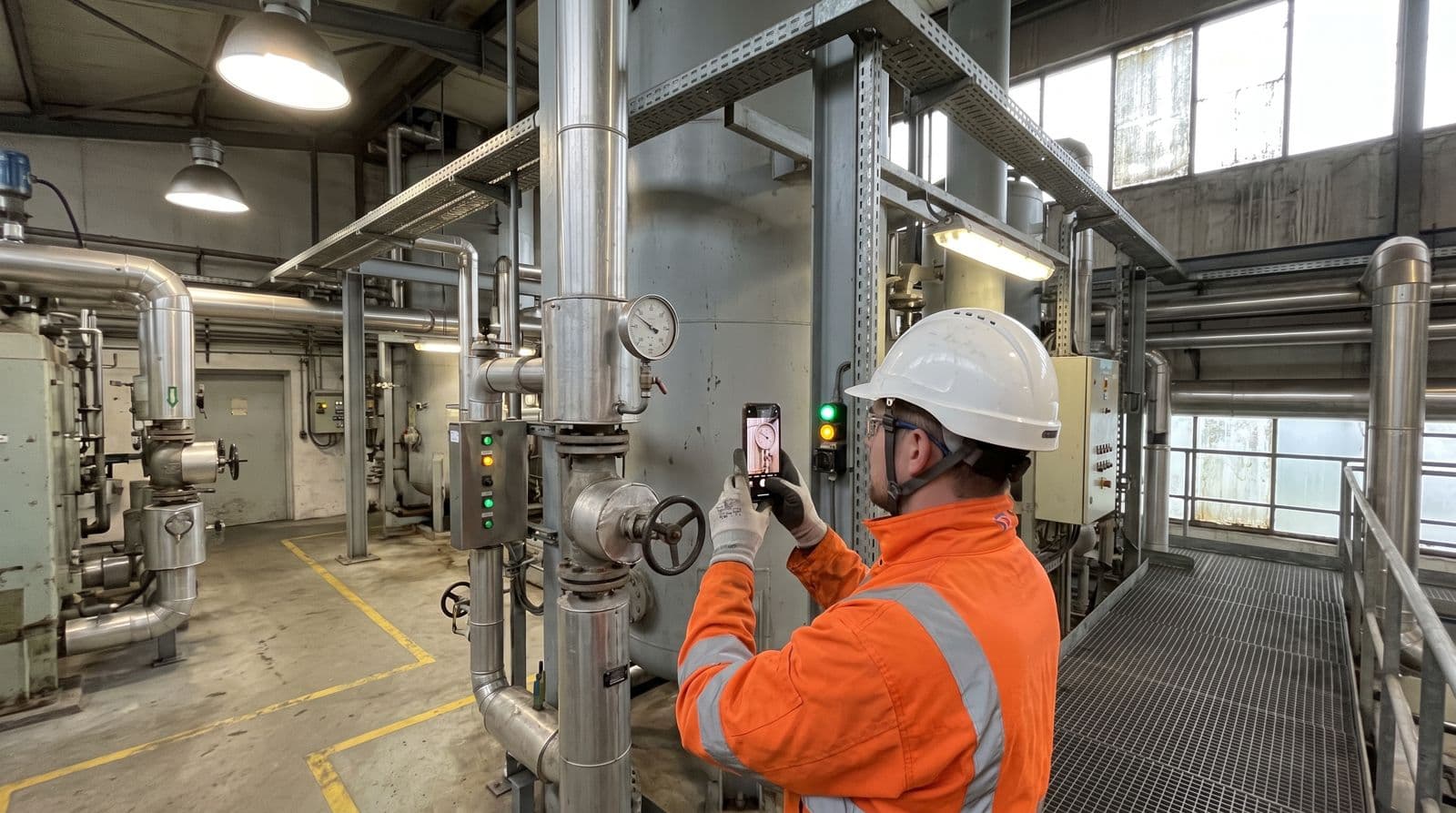
The shift notes what they see and do: a photo and a few words, on the phone they already carry.

Analytics cookies
May we use cookies to see how this site is used? This includes recordings of visits, with everything you type hidden. If you reject, we only count visits, without cookies. Privacy policy
Operational improvement platform for continuous manufacturing
Oppr is for process plants with a problem that keeps coming back. It puts shift notes and machine data on one timeline. AI analysis gives hypotheses that your people test on the floor.
Tell us one problem in your process. We reply with a few questions.
After the thick material, the filter stays clear with a longer flush and the pump at half.
Proposed by the analysis. Your people decide.Working with




Shifts on the same recipe get different results. Last year's gain has faded, and nobody can show why.
Right after the switch from the thick material, the filter after the vessel blocks again. The shift lead flushes it longer and runs the pump at half until it runs clear. The line runs.
The next time the thick material runs, the same filter blocks. A different shift is on. They start from zero.

The shift found something that works. It never reached the morning meeting.
See the full cycle01Capture
The shift notes what they see and do: a photo and a few words, on the phone they already carry.
02Connect
The stop is no longer just “Other”.

03Execute
Your people test each hypothesis on the floor. What holds goes into standard work.

04Verify
Each shift confirms it with a photo, a reading or a sign-off.
Follow this filter through the four steps
A project must pay off, and the result must last.
Each improvement is held in place, so the next one starts higher.
We start where the return is easiest to show.
We build the baseline from your own data. We agree the success criteria with you before the work starts.
We start with one problem on one line. If the agreed success criteria are not met, you have not committed to more.
A local extract from the historian or ERP is usually enough to start.
Oppr asks little of the shift, and only where the problem needs it.
What the shift found reaches the morning meeting instead of Other.
A photo and a few words at the machine.
We look at the process, never at who was on shift. Nobody is scored or ranked.

Blocked again, after the switch from the thick material. Flushed longer, pump at half until it ran clear.
We are an improvement and digitization partner. We work on the improvement with your people, and the software is our tool to make it hold.
Management starts a large IT project. Two years later, the floor works around it.
Every improvement lives in its own Excel file. When the one person who combines them is off, nothing is combined.
“Twenty years of digitizing old factories taught me one thing: AI on bad data gives confident wrong answers. So we start with how the data is captured on the floor.”
 Derek Gobel, CTO
Fifteen years running plants, twenty years digitizing them, thirty years running OpEx transformations.
About Oppr